For most families, a home is both a place to live and their biggest financial asset. It is also typically their largest monthly expense and source of debt. Because of this, the housing market has a big impact on the overall economy. Even as investors have focused on global events and market swings, home prices remain near all-time highs — and that matters for financial planning.
Housing activity is mixed but prices remain near record levels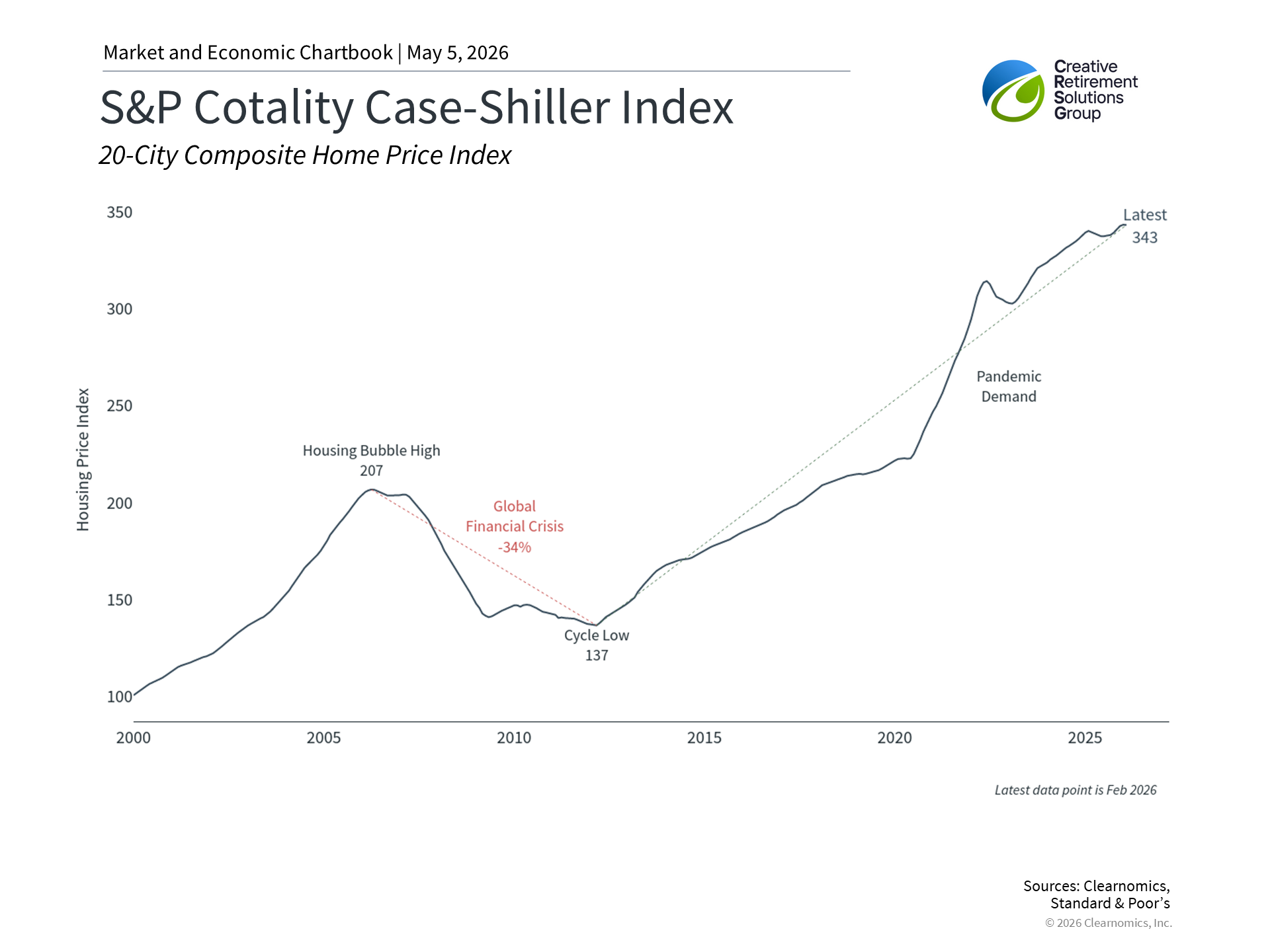 |
One of the biggest obstacles for new homebuyers today is the cost of borrowing. The 30-year fixed mortgage rate (the most common home loan) is around 6.3%. That is well above the historic lows of 3% or less seen in 2020 and 2021, and higher than the average of 4.6% since 2008. This makes monthly mortgage payments much more expensive than they were just a few years ago.
Many existing homeowners locked in those low rates and are reluctant to sell, since doing so would mean taking on a new, higher-rate mortgage. This has kept the number of homes available for sale quite low. In March, sales of existing homes fell 3.6%, reversing an earlier climb. Meanwhile, new home construction has picked up — housing starts reached 1.5 million units per year in January — but it will take time before this eases price pressure.
Despite slower sales activity, home prices across the country remain near record highs. The S&P Cotality Case-Shiller indices, which track home prices nationally and in major U.S. cities, have risen steadily. Prices have only dropped significantly twice in recent memory: during the 2008 housing crisis and briefly after inflation surged in 2022. High home prices have helped keep homeowners’ finances relatively healthy, which in turn has supported consumer spending even as confidence has been shaken by inflation and job losses in some sectors.
Real estate is a key building block of wealth across generations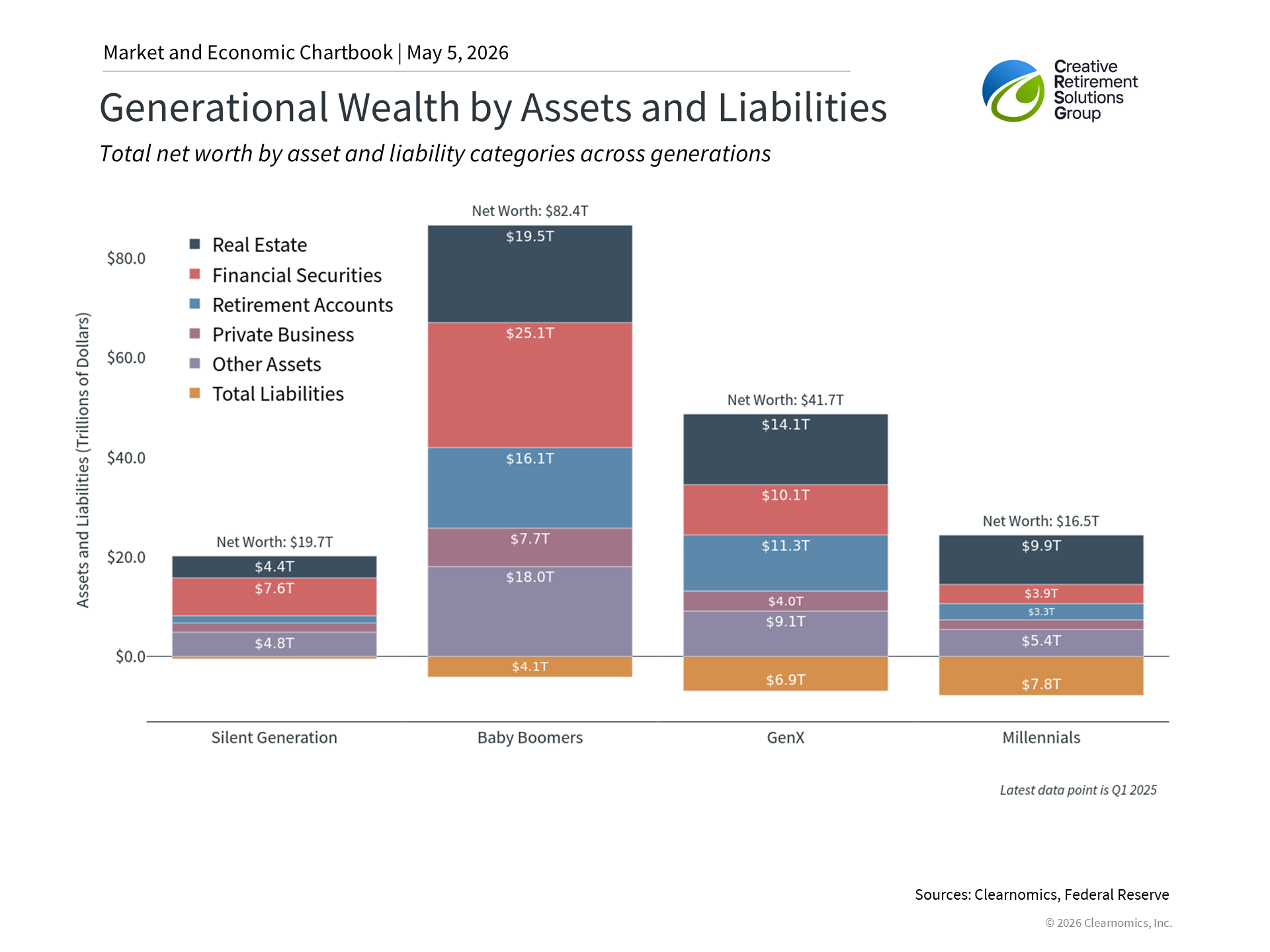 |
Real estate is a major part of household wealth for people of all ages. Baby Boomers hold over $19.5 trillion in real estate, making up about 24% of their total net worth. For Gen X and Millennials, real estate accounts for roughly 34% and 60% of their net worth, respectively. Younger households also tend to carry more mortgage debt, since they have had less time to pay it down or benefit from long-term home price growth.
This is sometimes called the “wealth effect” — when home values rise, people tend to feel more financially secure and may spend more, even if they do not actually tap into their home equity. This makes the housing market an important driver of economic activity. It also highlights why a complete financial picture matters: short-term stock market swings may feel alarming, but for many people, their home is actually their most significant asset. Focusing on managing mortgage debt and other obligations may be just as important as watching the stock market.
Household debt is largely driven by mortgage borrowing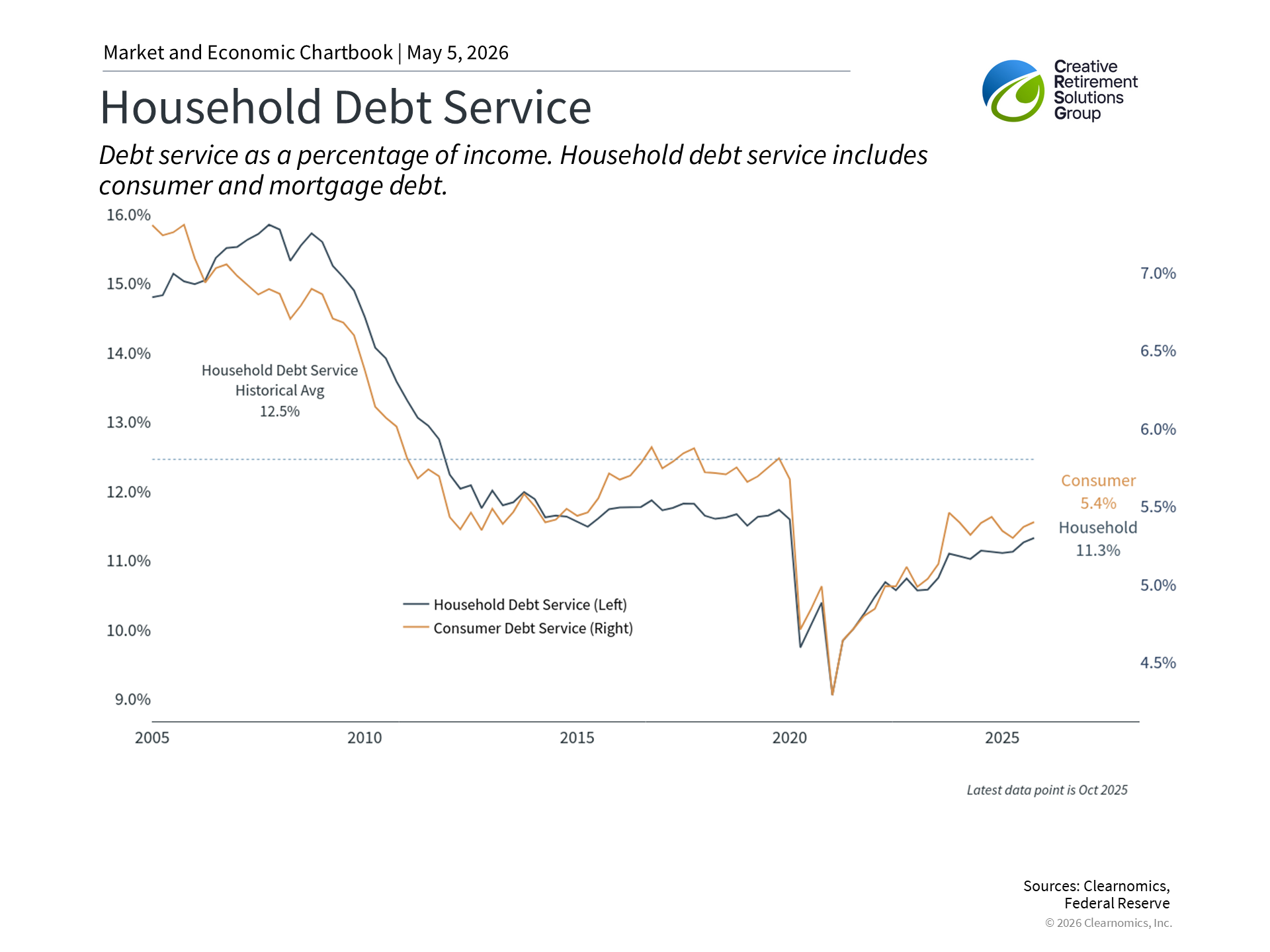 |
Housing is not only most households’ largest asset — it is also their largest source of debt. Mortgage debt (money borrowed to buy a home) makes up the biggest portion of total household borrowing, even as credit card and student loan balances have grown. On the positive side, the share of income that households spend on debt payments remains moderate compared to historical levels. Lending standards have also been stricter since the 2008 financial crisis, when debt levels were far higher.
For investors focused on long-term financial goals, it is important to look at the full picture — not just what is happening in the stock market. While news headlines may highlight market volatility, the health of the housing market and the management of household debt may actually play a bigger role in achieving financial security over time.
The bottom line? The housing market remains a core part of both household finances and the broader economy. With ongoing market volatility, understanding the key drivers of household wealth can help investors maintain perspective and stay focused on their long-term financial plans.